Token Launchpads are Stunting Consumer Growth in Crypto.
Some of the most successful consumer applications that exist in the crypto world right now are token launchpads. These platforms allow anyone to create and launch a token without developing a smart contract.
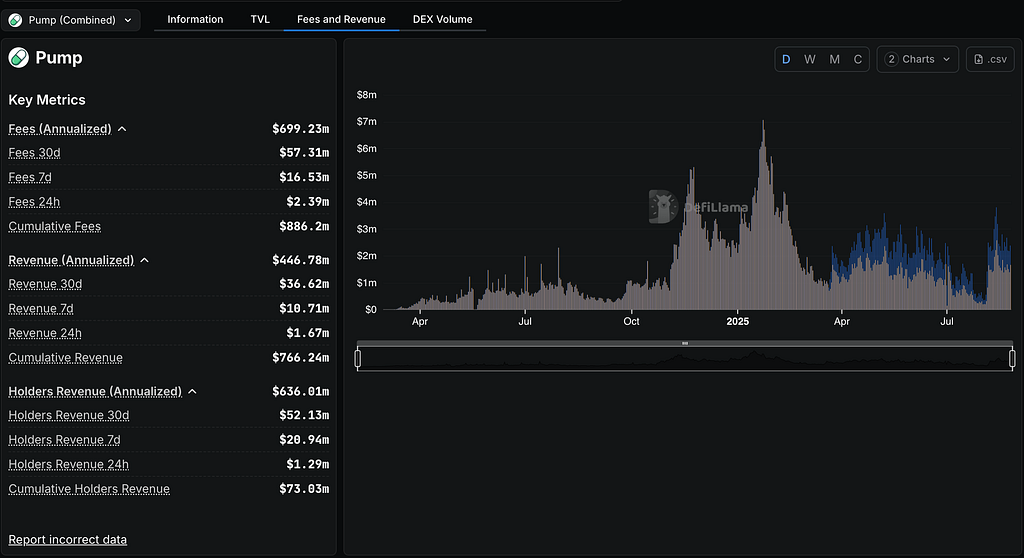
PumpFun, the first and most popular token launchpad on Solana right now, generates roughly $700m in fees per year, with about ~$450m of that being revenue. Before other launchpads emerged, all of what they generated in fees were revenue. But that changed when new launchpad competitors started offering “creator rewards”, which forced Pumpfun and every other launchpad to follow suit.
Pumpfun takes a 1% fee off of every purchase or sale of each trade made with the coins on their platform. As of May 13th, 2025, the creator of the token now receives 0.05% of all trade fees.
Token launchpads are a highly profitable business, as evident with PumpFun’s success. But I am doubtful that they will continue thriving if something does not change with the # of tokens being launched per day. The screenshot below represents PumpFun’s revenue according to DefiLlama.
Due to the recent influx of operating launchpads, and the competition that comes with them, token deployers that are using these platforms to launch are now getting a split of the fees that are generated off of each new token they create. This can be HIGHLY lucrative for token deployers, and for the launchpads themselves, but in reality this incentive mechanism is actually deterring net-new blockchain users from staying on-chain.
There are a number of problems that these recently introduced “creator rewards” are causing. The first problem is that it is completely free and mind-numbingly easy to launch a token on any of the token launchpads, which are growing in number everyday.
This allows token deployers to have an unlimited number of chances to create a “runner” (term collectively used by memecoin traders to describe a token that breaks a 1m marketcap), with absolutely no downside risk if it does not work out. If their token goes to zero, they do not get discouraged, they do not face any financial consequence, they simply just think of a new idea and try again. The only people suffering in this scenario are the traders buying their tokens.
As a result, the launchpads are indirectly **incentivizing the rapid demise of their own platforms, by welcoming these **token deployers to create as many coins as possible.
The reason why this is hurting their own platforms is because memecoin traders are fatigued due to all of this token saturation. What used to be a fun and potentially lucrative way to use your Solana on-chain, is quickly becoming a sure-fire way to become frustrated with blockchains, give your money to insiders + token deployers, and want to give up on blockchain experimentation and the “future of finance”. The traders that are generating the fees for these launchpads, are becoming discouraged to continue buying their tokens.
The reason why this is stunting the consumer growth in crypto, is simple. New-entrants are getting burned by the very thing that is attracting them to give this technology an honest try.
The question is, do the launchpads care? My guess is probably not, because they know that more launches = more fees = more revenue. That is why the creator rewards were introduced in the first place.
But my next question is if they do not do something, will the memecoin traders move on and will we see this memecoin meta dry-up?
This is eerily similar to what happened to the NFT space after launchpads were introduced in 2022. NFTs on Solana thrived until launchpads were introduced, and it was simply because the demand outweighed the supply. Launchpads, wether they are for NFTs or Memecoins, are not a sustainable or productive solution to meet demand. They over-stimulate supply too quickly, which causes demand to naturally dwindle.
What is making this bad problem even worse, is that the new launchpads feel the need to stand out from their competitors with a differentiating factor, so now they are all offering even higher percentages in “creator rewards” for token deployers. It is essentially a race to the bottom for new launchpads trying to incentivize deployers.
Saturation and fatigue seem to be the consumer killer in crypto, but many of the memecoin infrastructure providers need to incentivize launches to keep making money. This is problematic for consumer growth, but that doesn’t mean there is no solution.
There is a lot they can do to improve the saturation situation, that can actually be more lucrative for their bottom line as well. Simply charging 1 Solana to launch a token would make the situation a LOT better overnight. Or furthermore, they could theoretically require a 5 Solana deposit that is held in escrow and returned to the deployer a week after the token launches. This would simply serve as a way to increase the quality of launches, and also greatly reduce a lot of the token spam that comes from bots. The fee structure can stay the same and traders + platforms would benefit due to less saturation.
Deployers are consistently launching roughly 30,000 tokens every single day, and they are fully incentivized to keep doing so. The worst part is, most of these tokens are deployed by the same 7–15 automated bots, which is creating another problem for retail traders.
The deployer bots typically launch tokens based off of the most popular news that comes out throughout each day, and most of the time the different bots will launch a unique version of the exact same token concept, the only difference is the contract addresses. This is what memecoin traders call “PvP”(player vs player) because it is forcing traders to pick one coin over another, fragmenting liquidity and negatively impacting both coins + the traders backing them.
This “creator reward” concept is creating a negative feedback loop that incentivizes token creators to launch as many tokens as possible, essentially creating a “spray and pray” environment for memecoin launches.
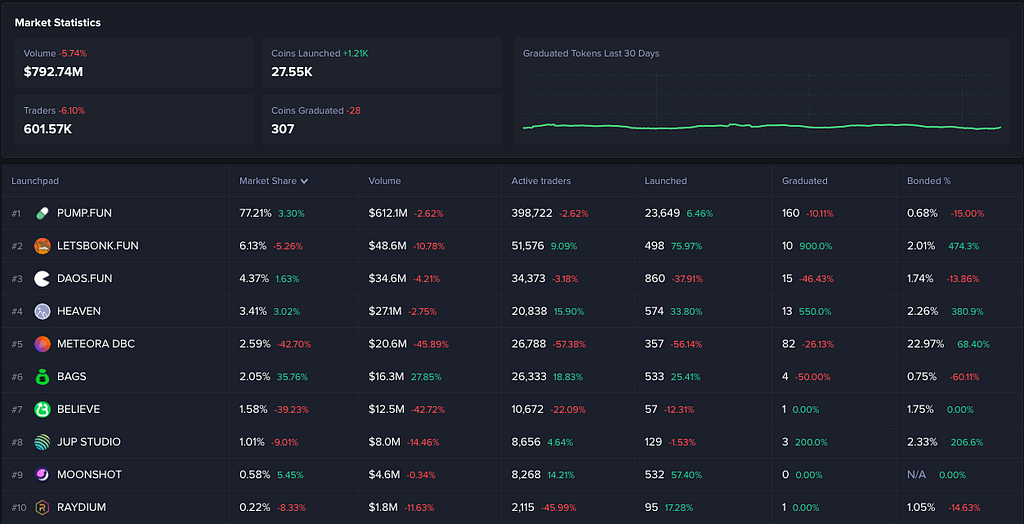
The screenshot below displays the launchpad marketshare data according to MobyScreener. I only included the top 10 to keep the screenshot manageable.
Memecoins were the ultimate consumer growth tool within the entire crypto space. They attract retail and professional traders with a broad range of crypto experience due to their upside potential. From complete beginners (net-new users) and “whales” who are trading these coins with 7 figures, everyone wants to see if they can hit an 100x.
I would argue that memecoins have actually been a net-positive for the growth of blockchain awareness + experimentation, but now they are actually limiting growth because they leave a bad taste in new users mouth.
The TLDR here is that launchpads should reconsider their incentive structure to keep traders happy. Their business model relies on traders buying their tokens, not necessarily token deployers launching on their platform. There will always be demand for speculation, but if there are too many tokens to speculate on, the liquidity will eventually dry up and their business will suffer. We are already seeing a 95% decrease in on-chain traders since January, and I do not expect traders to come back as long as there are this many new tokens emerging on a daily basis.
Thanks for reading, and if you want more takes like this be sure to follow me here on Medium, or check out my YouTube channel OnChain Education.